
The Frozen Flames
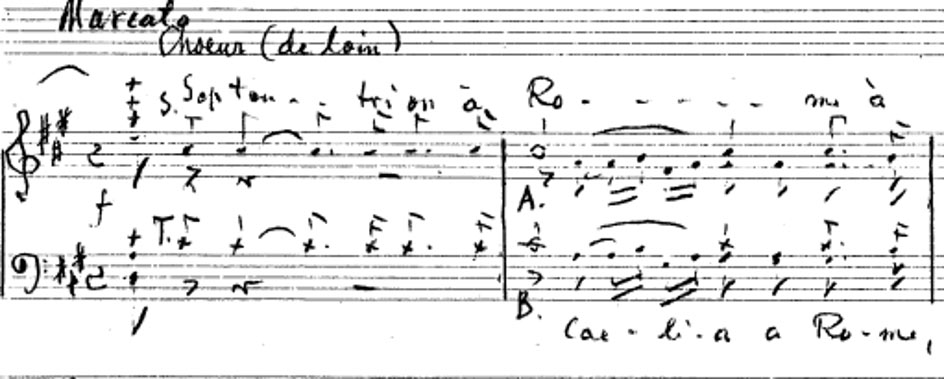
One act opera, 12 visions (for television)
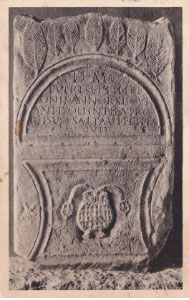
D.M.
Pueri Septentrionis XII qui Antipoli in theatro bi duo saltavit et placuit
To the Manes of the child Septentrion aged 12 who in Antibes, in the theatre, for two days danced and pleased
The Author to the Reader
The story of Septentrion—which, as far as I know, has not yet been told in literature—is the moving tale of a young boy who died at the age of 12 and who would have had a promising career as an artist. The stone erected in his memory does not bear, as was the custom, the name of the person who raised him.
Which means that Septentrion was a slave and had no parents. His slave name leads us to believe that he was of Nordic origin, perhaps a descendant of the Fenno-Germanic Vikings of Scandinavia, who were in contact with Brittany by sea and still continue their ancient trade, and of whom the author is a descendant.
In that opera, the author has borrowed melodic motifs from the musical folklore of Provence and Scandinavia to convey the necessary color to specific situations. We cannot claim that these melodies of today were sung in antiquity in those regions. But neither can we assert that they are not an ancient heritage that still persists. In Provence, a two-person finger game, “la mourra,” survived, which was also known to the Romans: mi digitis.
Why not then assume that some present folk melodies are real survivals? A Scandinavian melody, the opening bars of which were inserted in this piece, very likely has a thousand-year-old origin. In these bars, there a sequence of tones typical of folk music: D F A C E.
Finally, it must be emphasized that the indigenous peoples of the Arctic countries, such as the Inuits and the Samis, have an almost visceral attachment to their land, even though life there is most precarious. A similar regionalism can also be found among other Nordic peoples. We can therefore assume that poor Septentrion, who was seriously ill, languished far from his native land, overwhelmed by so many memories.
The original title, Stella borealis, was changed: now Jäiset liekit, The Frozen Flames.
The scene
An open courtyard, serving as a foyer for the performers, is located in the immediate vicinity of the theater. It is surrounded by Corinthian columns. In the background stand the statues of the three Muses: Thalia, Melpomene and Terpsichore, the latter standing in front. A Greek-style arrangement is set up on the right: a marble bench covered with a few cushions, and next to it, a marble table. Torches illuminate the scene. On the table and on the statues’ pedestals, olive oil burns in oil lamps resembling catacomb lamps.
It is late in the afternoon, night is rapidly falling, and the moon illuminates the scene. The action takes place toward the end of the Roman Empire.
Setting: The Greco-Roman city of Antipolis on the Mediterranean coast.
1. Prologue
2. Slaves in Rome
3. At Caesar’s
4. Two Slaves
5. The Mediterranean Country
6. The Land of Clear Nights
7. The Frozen Flames
8. The Snowman
9. The Festival of the Three Muses
10. Free in Rome
11. The White Tree and the Star
12. Epilogue

